

30 July
Artificial Intelligence / Blog / Cybersecurity
IoT in Healthcare: Transforming Patient Care and Raising New Risks in 2025
 IoT in Healthcare: Transforming Patient Care and Raising New Risks in 2025
 IoT in Healthcare: Transforming Patient Care and Raising New Risks in 2025
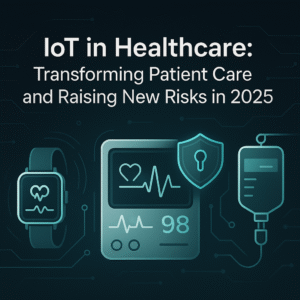
The Internet of Things (IoT) is reshaping healthcare by connecting devices, patients, and providers in real time. From wearable monitors to smart hospital systems, IoT is improving outcomes—but it also introduces new security and privacy challenges.
1. Benefits of IoT in Healthcare
a. Remote Patient Monitoring
Wearable devices track vital signs like heart rate, glucose levels, and blood pressure, allowing doctors to monitor patients remotely and intervene early.
b. Smart Medical Devices
Connected devices like insulin pumps and pacemakers can be adjusted remotely and provide real-time data to healthcare providers.
c. Efficient Hospital Management
IoT helps hospitals manage inventory, track equipment, and optimize workflows. Smart beds, RFID tags, and automated alerts improve operational efficiency.
d. Enhanced Diagnostics
IoT-enabled imaging and diagnostic tools can share data instantly across departments, speeding up diagnosis and treatment planning.
2. Risks and Challenges
a. Data Privacy Concerns
IoT devices collect sensitive health data. Without proper encryption and access controls, this data is vulnerable to breaches.
b. Device Security
Many IoT devices lack robust security features. They can be exploited by attackers to gain access to hospital networks or manipulate device behavior.
c. Compliance and Regulation
Healthcare providers must comply with regulations like HIPAA and GDPR. IoT complicates compliance due to the volume and variety of data collected.
d. Interoperability Issues
Different devices and platforms may not communicate effectively, leading to data silos and integration challenges.
Conclusion
IoT is revolutionizing healthcare, offering better patient outcomes and streamlined operations. However, it demands strong cybersecurity, regulatory compliance, and thoughtful implementation to mitigate risks.
Related Posts:



Leave A Comment